-
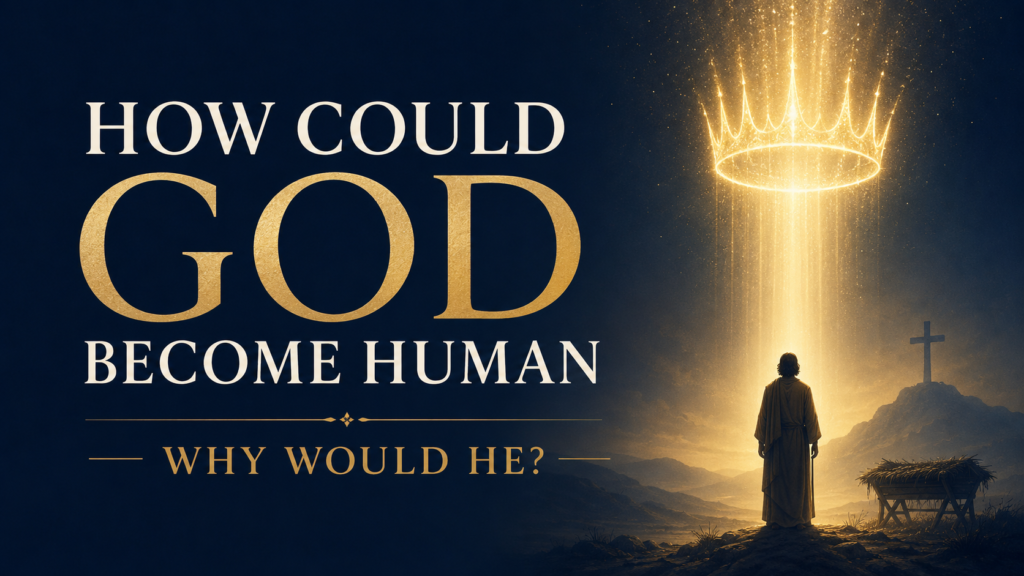
Main truth: We may not understand exactly how God became human, but that does not mean we have no reason to believe that He did. Scripture gives strong reason to believe the incarnation and explains why He came.
-
The incarnation is a mystery, not a contradiction. Jesus Christ is the eternal Son of God who took a true human nature without ceasing to be God.
-
Jesus remained fully God. He did not become less than God when He became man; “in Him dwells all the fullness of the Godhead bodily.”
-
Jesus became truly human. He experienced hunger, thirst, tiredness, suffering, and physical death, yet remained without sin.
-
God Himself brought about the incarnation. The virgin conception was a unique act of God through the Holy Spirit, not something Scripture attempts to explain scientifically.
-
Faith should avoid two errors: pretending we can explain everything God has not explained, and rejecting what God has revealed simply because it is beyond our understanding.
-
God came near to us. Christianity announces not merely man trying to reach God, but God coming to us: “The Word became flesh and dwelt among us.”
-
Jesus entered the real human condition. He knew hunger, grief, rejection, betrayal, injustice, pain, and death, so He is able to sympathize with human weakness.
-
Why did God become human? — To reveal God to us. Jesus makes the Father known. In Christ we see God’s holiness, compassion, truth, righteousness, grace, and love.
-
Why did God become human? — To die in our place. The incarnation moves from mystery to mercy. The Son became truly human so He could truly suffer and die as our substitute.
-
He became human to represent us. Where Adam disobeyed, Christ obeyed. Jesus could stand in the place of sinners because He truly became one of us, yet without sin.
-
He had to be sinless to save us. Christ, “the just for the unjust,” bore the judgment our sins deserved so that guilty sinners could be brought to God.
-
Our greatest need is salvation, not self-improvement. We must stop trusting our goodness, religion, baptism, family, or works and trust Jesus Christ—the Son of God who became man, died for sinners, and rose again.
-
Jesus became our perfect Mediator and High Priest. Because He is truly God and truly man, He can bring God to us and bring us to God.
-
For believers: run to Christ when you fail, remember His sympathy when you suffer, come to God through Him in prayer, and rest your acceptance with God in Christ rather than your performance.
-
The incarnation changes our past, present, and eternity: our sins can be forgiven, Christ presently intercedes for us, and death no longer has the final word.
-
The gospel is rescue. Religion says, “Climb higher. Try harder. Become better.” Jesus came down, took our humanity, bore our sin, conquered death, and brings sinners to God.
-
The evidence calls for a response. Biblical faith is not believing without evidence; it is trusting the Person to whom the evidence points—Jesus Christ.
-
The greatest question is not only “How could He come?” but “Why would He come?” He came because we could not rescue ourselves, because sin separated us from God, because love moved Him toward sinners, and because He came to bring us back to God.
-
Final message: The incarnation is a mystery—but it is also mercy. God came near so that sinners could be brought near to God. Jesus entered His creation to rescue us.